📋 What you’ll learn in this guide
- The 5 key things to look for when hiring a web designer
- The difference between a freelancer, agency, and DIY — and which is right for you
- 10 essential questions to ask before signing any contract
- Red flags that signal an unreliable web designer
- How to get the best results on any budget
Knowing how to choose a web designer for your small business is one of the most valuable decisions you will make for your online presence. Choosing the right web designer for your small business is one of the most important decisions you’ll make for your online presence in 2026. Get it right and you’ll have a professional, high-performing website that attracts clients and grows your business. Get it wrong and you risk wasted money, missed deadlines, and a website that does nothing for your bottom line.
The good news? Knowing how to choose a web designer for your small business doesn’t have to be complicated. This guide walks you through everything — from understanding your options to asking the right questions before you hand over a single dollar.
How to Choose a Web Designer for Your Small Business: Why It Matters in 2026
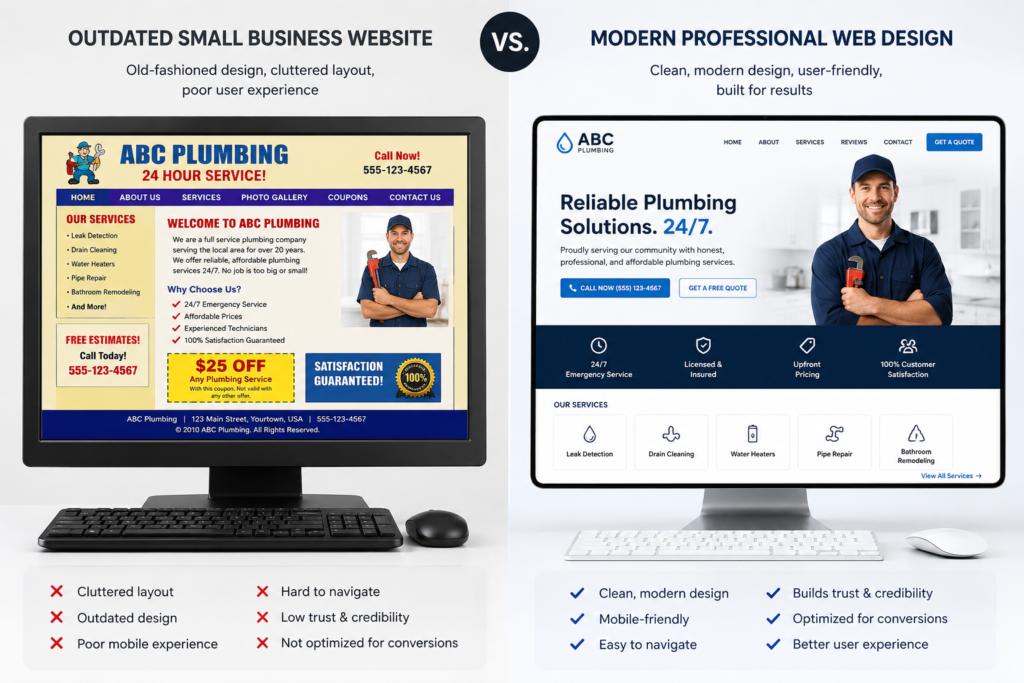
In 2026, your website is no longer just a digital brochure — it’s your hardest-working salesperson. It’s open 24/7, visible to anyone searching Google, and often the first impression a potential client gets of your business. Studies show that 75% of users judge a business’s credibility based on its website design — and you have less than 3 seconds to make that impression count.
A poorly designed website doesn’t just look bad — it actively loses you clients. Slow loading times, confusing navigation, and lack of mobile optimisation all push visitors away before they ever read your offer. In a competitive market, the right web designer for your small business isn’t a luxury — it’s a necessity.
Understanding your options: freelancer vs agency vs DIY
Before you start searching for how to choose a web designer for your small business, it helps to understand what type of designer you actually need.
| Option | Best for | Typical cost | Key consideration |
|---|---|---|---|
| DIY (Wix, Squarespace) | Pre-revenue startups, side projects | $0–$30/month | Costs your time, limited SEO capability |
| Freelance web designer | Small businesses with $1,000–$3,000 budget | $500–$3,000 | Variable quality, vet carefully |
| Boutique web design agency | Businesses wanting design + SEO + strategy | $1,500–$6,000 | Best all-round result, full support |
| Large agency | Enterprise, complex custom builds | $10,000+ | Overkill for most small businesses |
For most small businesses in 2026, a boutique web design agency or experienced freelancer hits the sweet spot — professional results without enterprise-level pricing. The key is knowing how to evaluate them before you commit.
5 key things to look for when choosing a web designer
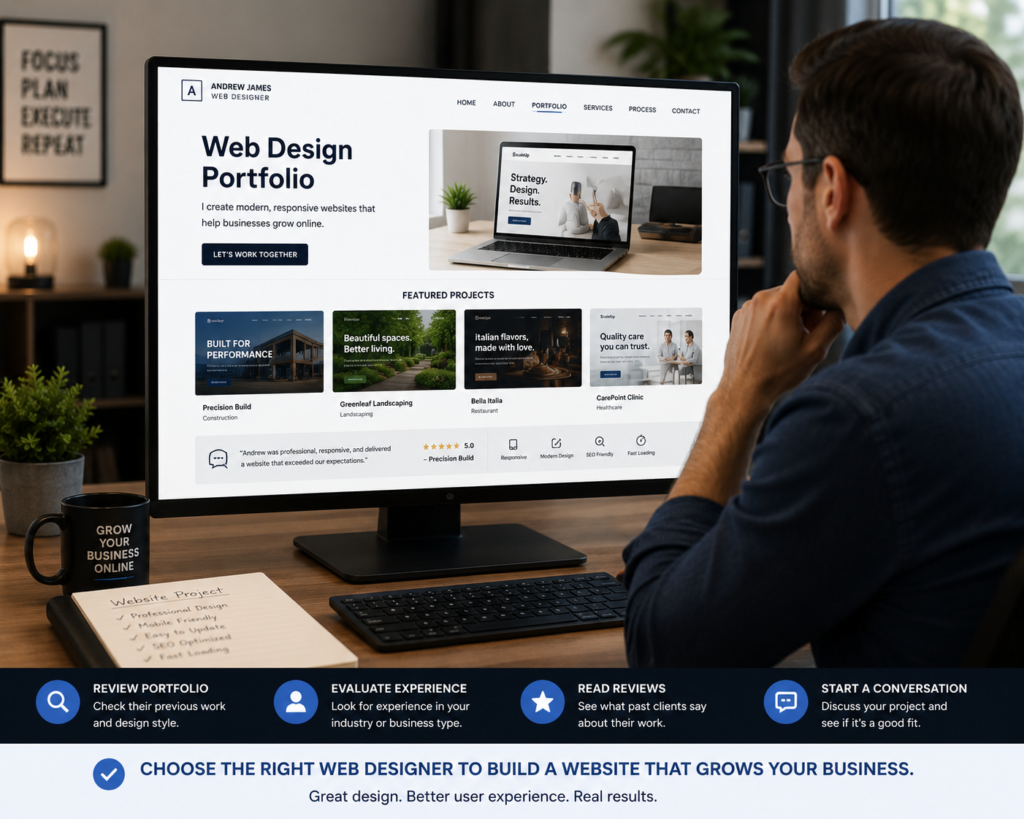
1. A strong portfolio relevant to your industry
The first thing to look for when choosing a web designer for your small business is their portfolio. Don’t just look at whether the sites look nice — look for websites built for businesses similar to yours in size and industry. A designer who has built websites for service businesses, coaches, or local shops will understand your audience better than one who only builds e-commerce stores.
Check that the portfolio sites are still live, load quickly, and look good on mobile. If a designer can’t maintain their own clients’ sites, that tells you something important.
2. WordPress expertise (the platform that grows with you)
In 2026, WordPress powers over 43% of all websites on the internet — and for good reason. It’s the most flexible, SEO-friendly, and scalable platform available for small businesses. When choosing a web designer for your small business, prioritise those who specialise in WordPress. It gives you full ownership of your site, access to thousands of plugins, and the ability to grow without rebuilding from scratch.
Be cautious of designers who only work on proprietary page builders or platforms you don’t own — you could be locked in with no way out.
3. SEO built in from the start
A beautiful website that nobody can find on Google is a wasted investment. The best web designers for small businesses in 2026 build with SEO as part of the process — not an afterthought. Look for designers who include on-page SEO setup (title tags, meta descriptions, image optimisation, site speed, and structured data) in their base package.
Ask specifically: “Do you set up Rank Math or Yoast SEO, and what’s included in your SEO setup?” A confident, specific answer is a good sign.
4. Clear process and communication
One of the most common complaints about web designers is poor communication — projects that drag on for months, vague updates, and disappearing acts after launch. Before hiring anyone, ask about their project process. How many revision rounds are included? How do they communicate — email, project management tool, calls? What happens if you need changes after launch?
A professional web designer for small businesses will have a clearly defined process and be able to walk you through it step by step.
5. Testimonials and verifiable reviews
Portfolio sites can be cherry-picked. Real client reviews tell the full story. Look for Google reviews, Clutch.co ratings, or LinkedIn recommendations from real, named clients. Be wary of designers with no reviews or only generic testimonials on their own website with no way to verify them.
10 essential questions to ask before hiring a web designer
When you’ve shortlisted your options, use these questions to make your final decision. The quality of the answers will tell you more than any portfolio ever could.
- Can I see 3 examples of websites you’ve built for businesses like mine?
- What platform do you build on, and will I own the site outright?
- Is SEO setup included, and what exactly does that cover?
- What is your process from start to launch, and how long does it take?
- How many rounds of revisions are included?
- Will I be able to update the site myself after launch?
- What support do you offer after the site goes live?
- Do you offer ongoing maintenance, and what does it cost?
- Who owns the design, content, and hosting account at the end?
- Do you have a contract, and what does it cover?
Pro tip: A great web designer will welcome all of these questions. If anyone seems evasive, dismissive, or rushed when answering, that’s your signal to keep looking.
Red flags to watch out for
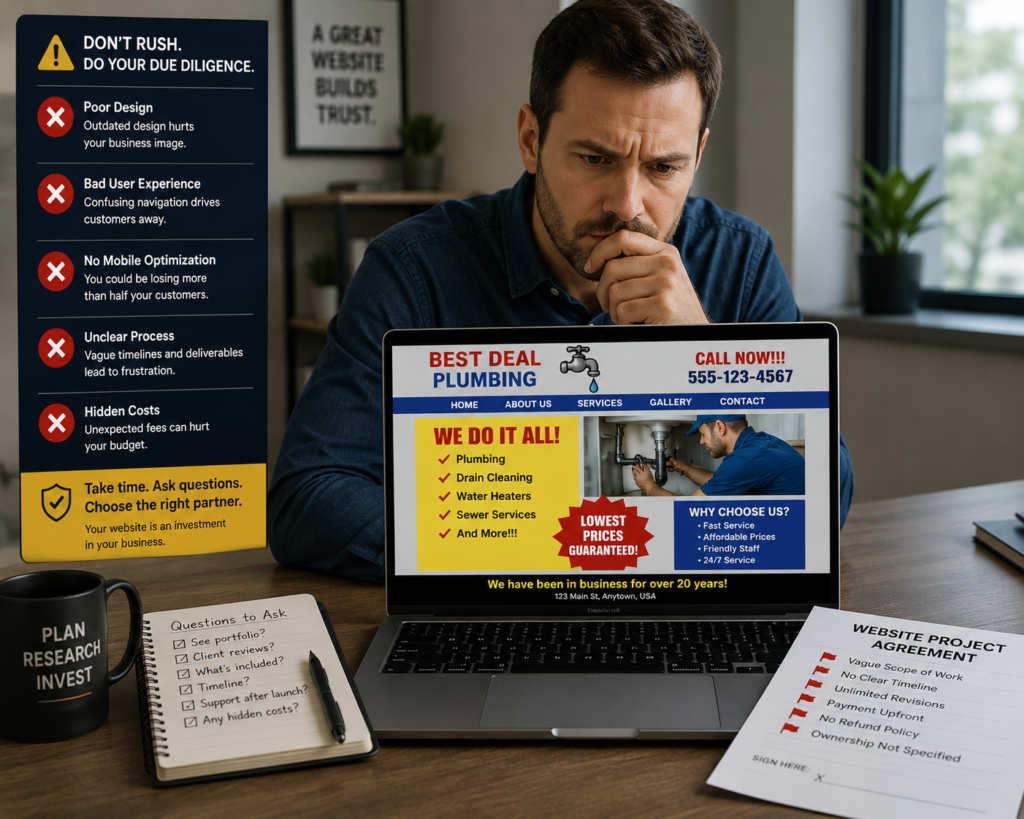
Knowing how to choose a web designer for your small business also means knowing when to walk away. These are the most common red flags:
- No contract or written agreement — Never proceed without a signed contract that covers scope, timeline, payment terms, and ownership.
- Upfront payment for 100% of the project — Standard practice is 50% upfront, 50% on completion. Full upfront payment with no milestone protection is a risk.
- Vague pricing with lots of “it depends” — Professional designers give fixed quotes or clearly defined hourly rates with estimated ranges.
- No portfolio or only mockups (no live sites) — Anyone can design a mockup. Ask for live URLs you can actually visit and test.
- Promises that seem too good to be true — “Page 1 Google rankings in 2 weeks” or “unlimited revisions forever” are classic warning signs.
- They own your hosting and domain — You should always own your own domain and have access to your own hosting account. Never let a designer hold these for you.
- No post-launch support plan — A website needs ongoing maintenance. A designer with no support offering leaves you stranded when things go wrong.
Watch out: If a web designer builds your site on their own hosting account and you later want to leave, they can hold your website hostage. Always insist on owning your own hosting from day one.
How to get the best results from your web designer
Once you’ve chosen the right web designer for your small business, here’s how to make the project a success from your side:
- Prepare your content before the project starts — Text, images, logos, and brand colours ready before kickoff means a faster, smoother project.
- Be clear about your goals upfront — “I want more enquiries from local clients” is more useful than “I want it to look nice.”
- Give specific feedback — “The blue feels too cold for our brand” is more actionable than “I don’t like it.”
- Respect the timeline — Delays on your side (approvals, content, feedback) are the number one cause of projects running over time and budget.
- Trust the process — You hired an expert. Give their recommendations fair consideration before defaulting to your personal preference.
Why small businesses choose Aesthetic Web Studio
At Aesthetic Web Studio, we specialise in building custom WordPress websites for small businesses that look stunning, load fast, and rank on Google. Every project includes full on-page SEO setup, mobile-responsive design, a training handover so you can manage your own site, and ongoing support whenever you need it.
We work with small businesses across all industries — both locally and remotely — with transparent pricing and a clear process from day one. No surprises, no lock-ins, and no holding your website hostage.
Related reading
Looking for a professional web design partner? Explore our WordPress web design services for small businesses or get in touch for a free consultation.
Before publishing, check your meta title and description length with our free meta tag checker. It shows a live Google SERP preview so you can see exactly how your page will appear in search results.
Get a personalised estimate for your project with our free website cost calculator. Answer 6 quick questions and get an instant cost range with no obligation.
Keeping your site updated and secure is essential. Learn about our WordPress maintenance plans starting from $99/month.
Ready to sell online? Our WooCommerce development service covers everything from product setup to payment gateways.
Need professional help with your SEO? Our SEO optimisation service covers keyword research, on-page SEO, technical fixes and content strategy for small businesses.
Want a website designed to convert? Our UI/UX design service focuses on layouts and user journeys that turn visitors into enquiries.
Looking for a professional WordPress developer? Our WordPress web development service covers everything from simple business sites to complex custom builds.
Not sure where to focus your online efforts? Our digital strategy service gives you a clear roadmap to turn your website into a lead-generating asset.
Track your word count, reading time and keyword density instantly with our free word count checker — no signup required.
Related reading: How Much Does a WordPress Website Cost in 2026? | How to Get Clients as a Web Designer in 2026 (Practical Guide) | 10 Small Business Website Mistakes That Cost You Clients (2026)
Want more free tools like this? Browse our full library of 20+ free SEO and marketing tools for small business owners.
Frequently Asked Questions
How much should I expect to pay a web designer for a small business website?
Freelancers typically charge $500-$3,000, while agencies typically charge $1,500-$10,000+ depending on complexity, matching the ranges covered in our website cost guide.
Should I hire a freelancer or an agency for my website?
Freelancers suit simple, single-page sites on a tight budget. Agencies suit projects needing ongoing support, strategy, and multiple skills such as design, SEO and copywriting working together.
What is the biggest red flag when choosing a web designer?
A designer who cannot show a live portfolio of similar work, or who is vague about timelines and revisions, is the clearest warning sign. Get specifics in writing before you commit.
If this was useful, tell Google you want more of it.