
Planning a website redesign is something most small business owners put off longer than they should. Most know their website needs a redesign long before they do anything about it. The signs are hard to ignore. Visitors leave without making contact, the site looks nothing like the business it represents, competitors have noticeably better online presences, or the site has not been updated in years. A website redesign done well addresses all of these problems simultaneously. Done poorly, it creates new ones while failing to fix the originals.
This guide covers when a redesign is genuinely warranted, what a good website redesign process looks like, and how to make sure the investment generates a measurable return.
When a Website Redesign Is Actually Needed
Not every website that looks dated needs a full redesign. Sometimes a content refresh, a speed optimisation, or an updated colour palette achieves the same outcome at a fraction of the cost and time. A full redesign is warranted when the problems are structural rather than cosmetic.
A few signs point to a full redesign rather than a refresh. The site is not mobile-friendly and the layout cannot be fixed without rebuilding the template. It generates no enquiries despite reasonable traffic. The underlying technology is outdated and cannot support current security standards or integrations. The brand has changed significantly and the site no longer reflects the business, or the site sits on a platform that is limiting growth — a restrictive website builder with poor SEO capabilities, for example.
If the primary complaints are visual — it looks a bit old, the colours are wrong, the images are stock photos you never liked — a targeted refresh rather than a full redesign may address the problem more efficiently.
Setting Clear Goals Before Starting
The most common reason website redesigns fail to deliver a return is that they are initiated without clear, measurable goals. “Make the website look better” is not a goal. “Increase enquiry form submissions from the services page by 30 percent” is a goal. “Reduce bounce rate from mobile visitors” is a goal. “Achieve a Google PageSpeed score above 85 on mobile” is a goal.
Before briefing any designer or agency, document specifically what the current site is failing to do and what success looks like in measurable terms. This documentation serves as the brief for the redesign and as the evaluation criteria after launch. Without it, you have no objective way to determine whether the redesigned site is performing better than its predecessor.
Audit Your Current Site Before Designing the New One
A redesign that discards everything from the current site without analysing what is working wastes valuable data. Before starting the new design, run a thorough audit of your existing site. Check which pages receive the most traffic, which generate the most conversions, which keywords the site currently ranks for, which content is worth preserving, improving, or redirecting, and what the current technical issues are according to Google PageSpeed Insights and Search Console.
This audit prevents two of the most common redesign mistakes. One is discarding content that ranks well and generates traffic, then wondering why organic traffic drops after launch. The other is changing URLs without proper 301 redirects, which can cause ranking losses that take months to recover from.
The Redesign Process: What Good Looks Like
A well-run website redesign follows a consistent process regardless of the scale of the project. The discovery phase establishes the business goals, target audience, competitive landscape, and content strategy before any design work begins. Attempting to design without this foundation produces websites that look polished but fail to communicate the right things to the right people.
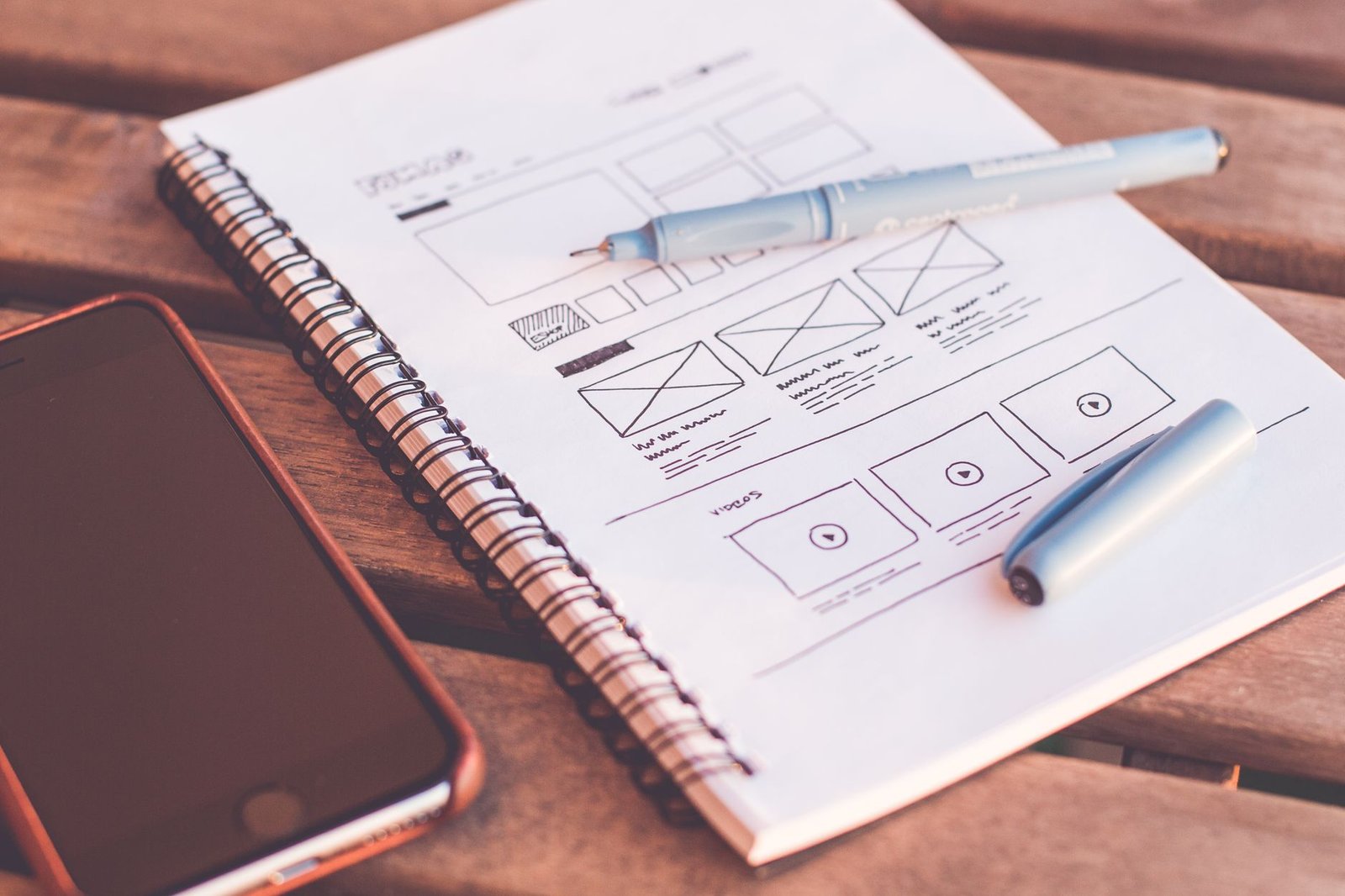
The design phase produces wireframes (structural layouts without visual design) before high-fidelity mockups. Wireframes are faster and cheaper to iterate on than fully designed pages, so getting the structure and content hierarchy right before committing to a visual direction saves significant revision time later.
The development phase builds the approved designs into a functioning website. For WordPress redesigns, this typically involves the new build being developed on a staging environment that is accessible to the client for review but not visible to the public or search engines. Testing covers functionality across browsers and devices, performance (PageSpeed scores), SEO setup (meta tags, sitemap, redirects), and form submissions before anything goes live.
The launch process for a redesign requires more care than a new build because there is an existing site with existing traffic and rankings to protect. A well-managed redesign launch includes a few standard steps: implementing 301 redirects from all old URLs to their new equivalents, submitting the new sitemap to Google Search Console right after launch, and monitoring rankings and traffic for the two weeks that follow.
How Much Does a Website Redesign Cost?
Website redesign costs follow similar patterns to new builds, with some additional considerations. A template refresh with updated content costs less than a custom redesign because the structural work is limited. A full custom redesign with new content, new photography, and complete technical rebuild typically costs 80 to 100 percent of what a new build would cost — the work involved is comparable.
For a small business website, expect to pay $1,500 to $5,000 for a custom redesign from a competent freelancer or boutique agency. Agencies charging significantly more for a comparable scope of work on a small business site are typically billing for overhead rather than proportionally better outcomes. Freelancers charging significantly less are typically either cutting corners on process (no discovery, no wireframes, no SEO setup) or are very junior and learning on your project.
Red Flags in a Website Redesign Brief
Several patterns reliably indicate a redesign project that is likely to underperform. Starting with visual references before discussing goals and audience is a red flag — design that follows strategy produces better commercial outcomes than design that follows aesthetic preference. Ignoring existing content and rankings entirely is a red flag. Building on a different platform from the current site without a clear reason is a red flag, because platform migrations carry technical risk that adds complexity without necessarily improving the outcome.
The most reliable predictor of a successful website redesign is a clear brief with measurable goals, a designer or agency who asks intelligent questions about your business before proposing a design direction, and a process that includes discovery, wireframing, development on staging, and a managed launch with proper redirects and Search Console monitoring. Get in touch with Aesthetic Web Studio to discuss a WordPress website redesign for your business, or read our guide on 5 signs your website needs a redesign to confirm whether yours qualifies.
Before publishing, check your meta title and description length with our free meta title and description checker. It shows a live Google SERP preview so you can see exactly how your page will appear in search results.
Get a personalised estimate for your project with our free website cost calculator. Answer 6 quick questions and get an instant cost range with no obligation.
If your current site is underperforming, read our guide to WordPress website redesign to understand what the process involves and what results to expect.
Need professional help with your SEO? Our SEO optimisation service covers keyword research, on-page SEO, technical fixes and content strategy for small businesses.
Want a website designed to convert? Our UI/UX design service focuses on layouts and user journeys that turn visitors into enquiries.
Looking for a professional WordPress developer? Our WordPress web development service covers everything from simple business sites to complex custom builds.
Not sure where to focus your online efforts? Our digital strategy service gives you a clear roadmap to turn your website into a lead-generating asset.
Track your word count, reading time and keyword density instantly with our free word count checker — no signup required.
Related reading: How Much Does a WordPress Website Cost in 2026? | How to Get Clients as a Web Designer in 2026 (Practical Guide) | 10 Small Business Website Mistakes That Cost You Clients (2026)
Frequently Asked Questions
How long does a website redesign take?
A small business website redesign typically takes 4 to 8 weeks from kick-off to launch when the client provides content and feedback promptly. Larger sites with more pages, complex functionality, or significant content creation requirements take 8 to 16 weeks. The most common cause of timeline extension is delayed content provision from the client — having your text, images, and brand assets ready before the project starts significantly accelerates the schedule.
Will a website redesign hurt my Google rankings?
A well-managed redesign should not cause lasting ranking losses. The risk comes from changing URLs without implementing 301 redirects, removing content that was ranking for valuable keywords, or significantly changing the content of high-performing pages. A redesign managed by an experienced team that includes proper redirect mapping, content audit, and Search Console monitoring as standard steps protects existing rankings while improving the new site’s foundation for future growth.
Should I keep my existing content in a website redesign?
Audit your existing content before deciding what to keep. Pages that rank for valuable keywords, generate meaningful traffic, or have backlinks pointing to them should be preserved, redirected correctly, or improved rather than discarded. Pages with no traffic, no rankings, and no backlinks can be removed or consolidated without SEO impact. The content audit is one of the most valuable steps in any redesign process and is routinely skipped by designers who are primarily focused on the visual aspects of the work.
If this was useful, tell Google you want more of it.